
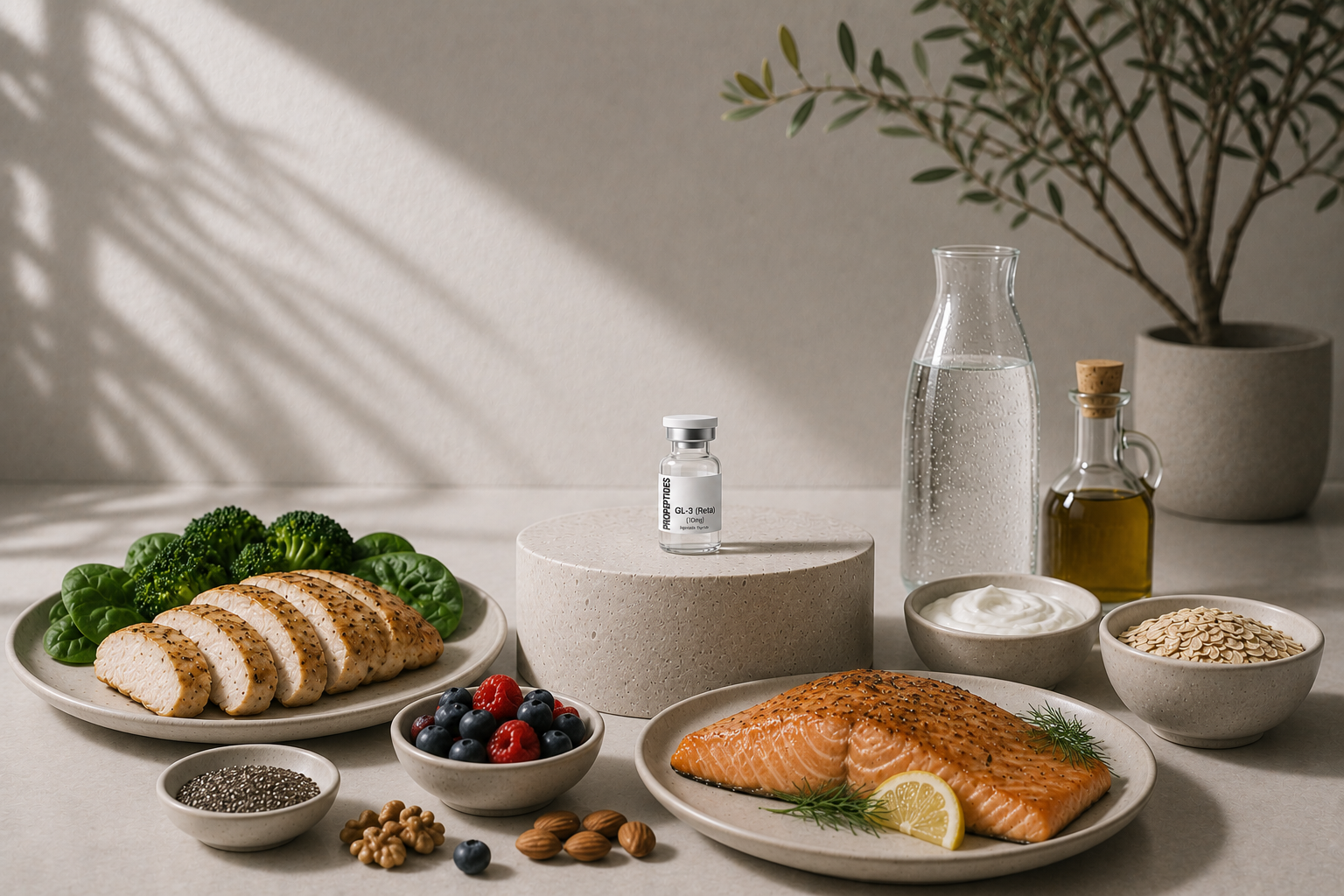
Nutrition During GLP-1 Therapy
Building Healthy Eating Habits That Support Long-Term Success
PROPeptides Foundations Program
One of the most common questions patients ask after starting semaglutide, tirzepatide, or another GLP-1–based medication is surprisingly simple:
"What should I eat?"
There is no single diet that every patient must follow. Instead, successful nutrition during GLP-1 therapy focuses on providing the body with the nutrients it needs while adapting to significant changes in appetite, digestion, and eating behavior.
Unlike traditional dieting, where individuals often struggle with persistent hunger, GLP-1 therapies frequently reduce appetite and increase fullness after relatively small meals. While this can make calorie reduction easier, it also creates new nutritional challenges. Patients who eat substantially less food must ensure that every meal delivers adequate protein, essential vitamins and minerals, healthy fats, fiber, and hydration.
The goal is not simply to eat less.
The goal is to eat better.
A well-designed nutrition plan helps preserve muscle, maintain energy, minimize medication-related side effects, and support long-term metabolic health.
Appetite Changes Are Expected
GLP-1 receptor agonists work in part by changing the way the brain interprets hunger and fullness.
Many patients notice that:
Meals become smaller.
Food cravings decrease.
Snacking becomes less frequent.
They feel full much sooner.
Thoughts about food become less intrusive.
These changes are expected and reflect the medication's intended biological effects.
However, eating substantially less food also means there is less room for nutritional mistakes. When total calorie intake decreases, every bite becomes more important.
Choosing nutrient-dense foods helps ensure that the body receives the building blocks necessary for maintaining health during weight loss.
Protein Comes First
If there is one nutritional principle that deserves special emphasis during GLP-1 therapy, it is adequate protein intake.
Protein provides the amino acids needed to:
Maintain skeletal muscle
Support recovery from exercise
Preserve immune function
Produce enzymes and hormones
Promote wound healing
Increase satiety
Because appetite is often reduced, many patients unintentionally consume far less protein than they realize. This can increase the likelihood of losing lean tissue during weight reduction.
Rather than beginning meals with carbohydrates or snacks, many clinicians recommend prioritizing high-quality protein first.
Examples include:
Fish
Chicken
Turkey
Lean beef
Eggs
Greek yogurt
Cottage cheese
Tofu
Tempeh
Legumes
Protein shakes when appropriate
The exact amount of protein varies according to age, body size, activity level, and medical conditions, but ensuring adequate intake should remain a central focus throughout treatment.
Focus on Nutrient Density
Because overall food intake often decreases, selecting foods that provide the greatest nutritional value becomes increasingly important.
Nutrient-dense foods deliver substantial amounts of vitamins, minerals, fiber, antioxidants, and healthy fats relative to their calorie content.
Examples include:
Vegetables
Leafy greens
Broccoli
Cauliflower
Bell peppers
Brussels sprouts
Asparagus
Fruits
Berries
Apples
Citrus fruits
Kiwi
Whole Grains
Oats
Quinoa
Brown rice
Farro
Healthy Fats
Avocados
Olive oil
Nuts
Seeds
These foods provide nutrients that support cardiovascular health, digestive function, immune regulation, and long-term disease prevention.
Fiber Supports More Than Digestion
Fiber is frequently associated with bowel regularity, but its benefits extend much further.
Adequate dietary fiber helps:
Improve satiety
Support a healthy gut microbiome
Moderate blood glucose responses
Lower LDL cholesterol
Improve digestive health
Many GLP-1 users experience constipation, particularly during dose escalation. Increasing dietary fiber gradually while maintaining adequate hydration may help reduce this problem for many individuals.
Good sources include:
Vegetables
Beans
Lentils
Whole grains
Chia seeds
Flaxseed
Fruit
Suddenly increasing fiber intake without sufficient fluids, however, may worsen gastrointestinal symptoms.
Hydration Matters
Reduced appetite often affects thirst as well.
Some individuals unintentionally drink less fluid while eating less food, increasing the risk of dehydration.
Hydration becomes particularly important because nausea, vomiting, or diarrhea may occur during early treatment.
Signs of inadequate hydration include:
Dark urine
Dizziness
Fatigue
Dry mouth
Headaches
Most healthy adults benefit from drinking fluids consistently throughout the day rather than waiting until they feel thirsty.
Water should remain the primary beverage, although electrolyte-containing fluids may occasionally be appropriate for individuals experiencing gastrointestinal symptoms or participating in prolonged exercise.
Eating Slowly
One of the physiological effects of GLP-1 therapy is slower gastric emptying.
Food remains in the stomach longer, contributing to prolonged fullness.
Patients who continue eating at their previous pace may not recognize fullness until after they have consumed more food than is comfortable.
Eating more slowly allows satiety signals time to develop.
Simple habits can help:
Take smaller bites.
Pause between bites.
Stop eating when comfortably satisfied rather than completely full.
Avoid eating while distracted by screens or work.
These behaviors often reduce nausea and improve meal satisfaction.
Foods That May Be More Difficult to Tolerate
Tolerance varies considerably from person to person, but certain foods are more likely to aggravate gastrointestinal symptoms during treatment.
These commonly include:
Large, high-fat meals
Fried foods
Highly processed foods
Excessive alcohol
Sugary beverages
Very large portions
This does not necessarily mean these foods must be eliminated permanently. Rather, many patients discover they feel better when meals are smaller, simpler, and balanced.
Learning how your own body responds is an important part of the process.
There Is No Perfect Diet
Patients often ask whether they should follow:
Mediterranean
Low-carbohydrate
Ketogenic
Paleo
Vegetarian
Vegan
Intermittent fasting
Current scientific evidence does not support a single dietary pattern as universally superior for every individual using GLP-1 therapy.
The most successful nutrition plans generally share several characteristics:
Adequate protein
Plenty of vegetables
High-quality carbohydrates
Healthy fats
Fiber-rich foods
Minimal ultra-processed foods
Long-term sustainability
The best diet is often the one that a person can realistically maintain while supporting overall health and enjoying life.
Nutrition Is Only One Piece of the Puzzle
Healthy nutrition works best when combined with:
Resistance exercise
Regular physical activity
Adequate sleep
Stress management
Medical monitoring
Appropriate medication use
These factors work together to improve body composition, preserve muscle, and reduce long-term cardiometabolic risk.
Weight-loss medications are powerful tools, but they produce the greatest long-term benefits when integrated into a comprehensive lifestyle approach.
Looking Ahead
Nutrition provides the fuel for successful weight loss, but physical activity determines how the body adapts to that fuel.
Exercise improves insulin sensitivity, preserves muscle, strengthens the cardiovascular system, and enhances long-term weight maintenance.
The next article explores how to exercise safely and effectively while using GLP-1–based therapies, including resistance training, cardiovascular exercise, recovery, and building sustainable fitness habits.
Key References
Jensen MD, et al. 2023 AHA/ACC/TOS Guideline for the Management of Overweight and Obesity.
American Diabetes Association. Standards of Care in Diabetes. Annual updates.
Phillips SM. Dietary Protein for Muscle Health during Weight Loss. Sports Medicine. 2021.
Murphy CH, Oikawa SY, Phillips SM. Protein Requirements During Energy Restriction. Current Opinion in Clinical Nutrition & Metabolic Care. 2021.
Estruch R, et al. Primary Prevention of Cardiovascular Disease with a Mediterranean Diet. New England Journal of Medicine.
Hall KD, Kahan S. Maintenance of Lost Weight and Long-Term Management of Obesity. Medical Clinics of North America.
Clinical Perspective
In our practice, nutrition counseling is centered on supporting physiology rather than following restrictive diets. We encourage patients to build meals around lean protein, vegetables, high-fiber carbohydrates, and healthy fats while listening to the body's changing hunger cues. Rather than chasing rapid weight loss, we focus on preserving muscle mass, maintaining energy, and creating eating habits that remain sustainable long after medication has been discontinued.
One important point we emphasize is that weight-loss medications are not a substitute for nutrition—they are a tool that creates an opportunity. By reducing hunger and improving satiety, GLP-1 therapies make it easier to establish healthier eating patterns. The habits developed during treatment often determine whether results can be maintained for years after the medication is stopped.