
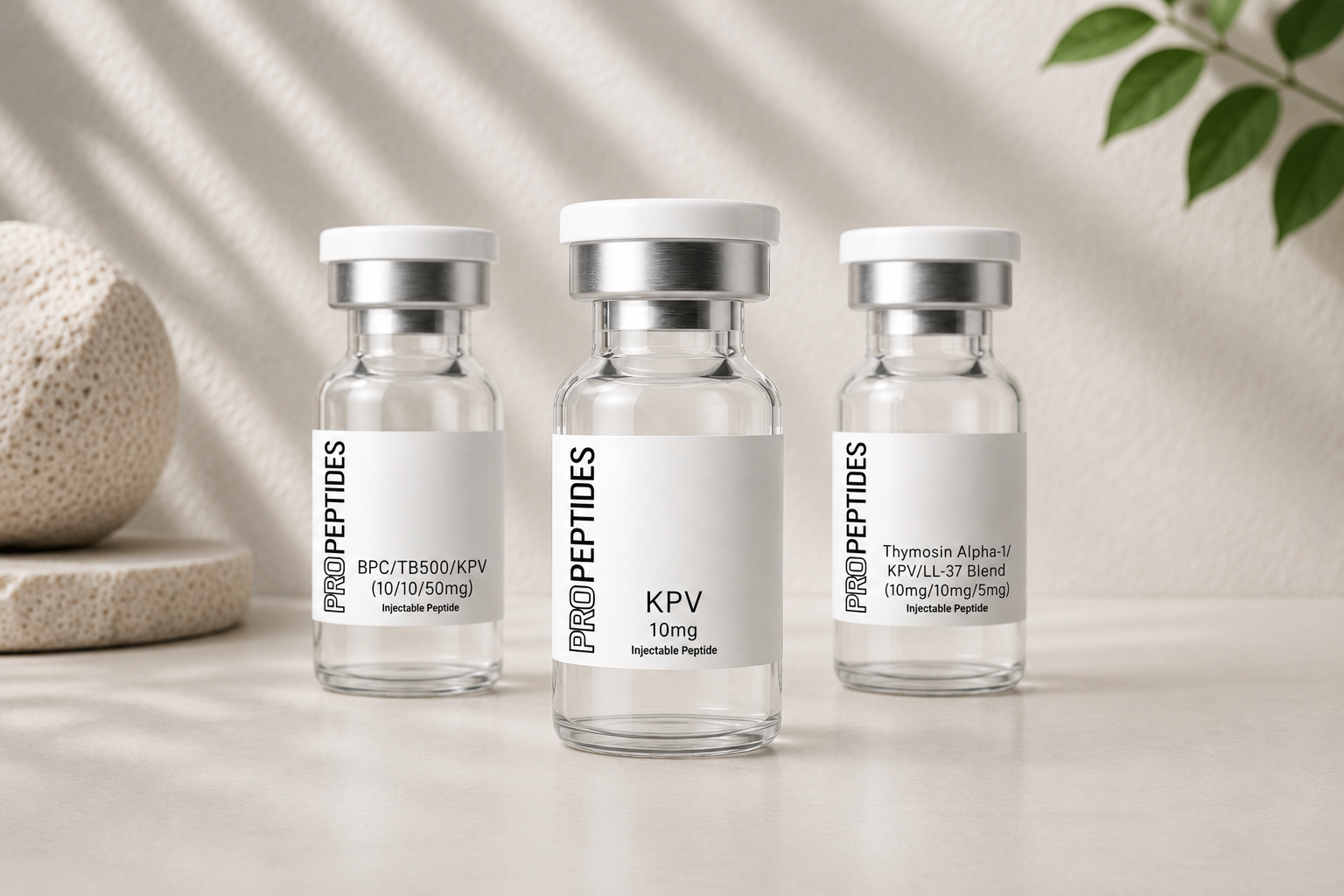
KPV
Understanding the Melanocortin System and the Biology of Immune Regulation
PROPeptides Foundations Program
Inflammation is one of the body's most important defense mechanisms.
Without inflammation, infections could not be controlled, damaged tissue would never be removed, and healing could not begin. Yet inflammation must also remain carefully regulated. An inflammatory response that is too weak may allow infection or delayed healing, while one that becomes excessive or persists too long may contribute to chronic pain, tissue degeneration, fibrosis, and autoimmune disease.
The body therefore relies on numerous biological systems to maintain balance between immune activation and immune resolution.
One of the most sophisticated of these systems is known as the melanocortin system.
Within this system, a naturally occurring hormone called alpha-melanocyte stimulating hormone (α-MSH) plays an important role in regulating inflammation, immune function, tissue repair, and barrier integrity.
KPV is a small three-amino acid fragment derived from α-MSH that has attracted growing scientific interest because many of the anti-inflammatory properties of the larger hormone appear to be preserved within this remarkably small peptide.
Although KPV remains an investigational compound and much of the available evidence comes from laboratory and animal studies, its biology offers valuable insight into how the body naturally regulates inflammation while supporting tissue healing.
What Is KPV?
KPV is a tripeptide consisting of only three amino acids:
Lysine
Proline
Valine
Its name simply reflects these amino acids.
Unlike many therapeutic peptides that were designed in a laboratory, KPV originates from a naturally occurring hormone already present within the human body.
Specifically, KPV is derived from alpha-melanocyte stimulating hormone (α-MSH), a peptide produced from the larger precursor protein proopiomelanocortin (POMC).
POMC serves as the precursor for several important hormones involved in:
Stress physiology
Pigmentation
Appetite regulation
Adrenal function
Immune regulation
This places KPV within one of the body's oldest and most highly conserved biological signaling systems.
The Melanocortin System
The melanocortin system regulates numerous physiological functions far beyond skin pigmentation.
Melanocortin peptides influence:
Immune function
Energy metabolism
Appetite
Body temperature
Inflammation
Skin biology
Hormone production
Tissue repair
These effects occur through a family of melanocortin receptors distributed throughout the body.
Each receptor performs different physiological functions depending upon its location.
This widespread distribution explains why melanocortin biology has become an active area of research across multiple medical specialties.
Alpha-Melanocyte Stimulating Hormone
α-MSH serves as one of the body's natural anti-inflammatory signaling molecules.
Unlike medications that broadly suppress immune activity, α-MSH appears to function primarily by helping regulate excessive inflammatory responses while allowing essential immune functions to continue.
Experimental research suggests α-MSH may:
Reduce excessive cytokine production
Influence macrophage behavior
Promote inflammatory resolution
Protect epithelial barriers
Reduce oxidative stress
Support tissue repair
KPV appears to retain many of these biological activities despite consisting of only three amino acids.
How Does KPV Work?
Researchers continue to investigate several mechanisms through which KPV may influence immune regulation.
Although much remains to be learned, several pathways appear repeatedly throughout the scientific literature.
Regulation of NF-κB
One of the most extensively studied mechanisms involves NF-κB (nuclear factor kappa-light-chain-enhancer of activated B cells).
NF-κB functions as one of the body's primary regulators of inflammatory gene expression.
When activated appropriately, NF-κB helps coordinate the normal inflammatory response following injury or infection.
However, excessive or prolonged activation has been associated with numerous chronic inflammatory diseases.
Laboratory studies suggest KPV may help regulate NF-κB activity, potentially reducing excessive inflammatory signaling without completely eliminating the normal immune response.
This distinction is important because successful healing requires inflammation—but also requires that inflammation remain appropriately controlled.
Cytokine Regulation
Inflammation depends on continuous communication among immune cells.
Much of this communication occurs through proteins known as cytokines.
Experimental studies suggest KPV may influence the production of several pro-inflammatory cytokines, including:
Tumor necrosis factor-alpha (TNF-α)
Interleukin-1 beta (IL-1β)
Interleukin-6 (IL-6)
Rather than completely suppressing these molecules, KPV appears to help regulate their expression during excessive inflammatory states.
Further research is needed to determine how these observations translate into clinical practice.
Immune Homeostasis
One of the central goals of the immune system is maintaining homeostasis, a balanced internal environment that allows normal tissue function.
Effective immunity requires a careful balance.
Too little immune activity increases susceptibility to infection.
Too much immune activity may contribute to tissue damage.
Current evidence suggests KPV may help support this balance by encouraging appropriate regulation of inflammatory signaling rather than indiscriminate immune suppression.
KPV and Gastrointestinal Biology
One of the most active areas of KPV research involves the gastrointestinal tract.
The intestinal lining represents one of the largest immune organs in the human body.
Every day it must tolerate food proteins, beneficial bacteria, and trillions of microorganisms while simultaneously protecting the body from harmful pathogens.
Laboratory studies have investigated KPV in models of:
Ulcerative colitis
Crohn's disease
Experimental colitis
Intestinal barrier dysfunction
Mucosal inflammation
Reported findings include improvements in inflammatory signaling and preservation of epithelial barrier integrity in experimental models.
Human clinical evidence remains limited, and additional research is needed before therapeutic conclusions can be drawn.
KPV and Skin Biology
Because α-MSH plays an important role in skin physiology, researchers have also explored KPV in dermatologic conditions.
Experimental investigations have evaluated potential applications involving:
Atopic dermatitis
Psoriasis
Contact dermatitis
Wound healing
Skin inflammation
These studies suggest that KPV may influence inflammatory signaling within the skin while supporting barrier function.
Several topical formulations continue to be investigated.
KPV and Systemic Inflammation
Beyond the gastrointestinal tract and skin, investigators have explored KPV across a variety of inflammatory models.
These include research involving:
Arthritis
Lung inflammation
Liver injury
Sepsis models
Metabolic inflammation
Although these studies demonstrate interesting biological mechanisms, most remain confined to laboratory and animal research.
Whether these findings translate into meaningful clinical outcomes in humans remains an important unanswered question.
KPV Compared With Traditional Anti-Inflammatory Medications
One reason KPV has generated interest is that its proposed mechanism differs from many conventional anti-inflammatory medications.
For example:
Nonsteroidal anti-inflammatory drugs (NSAIDs) primarily reduce prostaglandin production through cyclooxygenase (COX) inhibition.
Corticosteroids broadly suppress numerous inflammatory pathways by altering gene transcription.
KPV appears to function differently.
Rather than broadly suppressing inflammation, current experimental evidence suggests it may help regulate inflammatory signaling through melanocortin biology and immune homeostasis.
Whether this produces meaningful clinical advantages remains unknown and requires additional human investigation.
This distinction highlights an important principle of regenerative medicine: regulation is not the same as suppression.
Safety and Current Evidence
Most published KPV research has been performed in:
Cell culture studies
Animal models
Experimental inflammatory disease models
Compared with peptides such as GHK-Cu, relatively little human clinical research currently exists.
As a result, important questions remain regarding:
Clinical effectiveness
Optimal dosing
Route of administration
Long-term safety
Appropriate patient selection
For these reasons, KPV should be viewed as an investigational peptide whose therapeutic potential continues to be evaluated.
Bringing It All Together
KPV represents a fascinating example of the body's own biological mechanisms for regulating inflammation.
Derived from the naturally occurring hormone α-MSH, this small peptide appears to influence several pathways involved in immune homeostasis, inflammatory signaling, epithelial barrier function, and tissue repair.
Unlike therapies designed to eliminate inflammation, KPV is being investigated for its potential ability to support the body's normal processes of immune regulation and inflammatory resolution.
Although the majority of current evidence remains preclinical, continued research into melanocortin biology may provide important insights into future approaches for inflammatory and regenerative medicine.
Understanding KPV reinforces a central concept discussed throughout this educational series: successful healing depends not simply on generating inflammation, but on regulating it appropriately so that tissues can progress from injury toward repair and ultimately restoration of function.
Looking Ahead
Individual peptides each influence different aspects of tissue biology. Some are investigated for angiogenesis, others for cellular migration, collagen production, immune regulation, or extracellular matrix remodeling.
Researchers are increasingly interested in how these complementary biological pathways may work together rather than independently.
In the next article, we'll explore the scientific rationale behind Combination Therapy, examining why regenerative medicine increasingly emphasizes integrated approaches that combine biologic therapies, rehabilitation, nutrition, and lifestyle interventions to support tissue healing.
Key References
Catania A, Lipton JM. Alpha-Melanocyte Stimulating Hormone in the Modulation of Host Reactions. Endocrine Reviews.
Brzoska T, Luger TA, Maaser C, Abels C, Böhm M. Alpha-MSH and Related Tripeptides in Inflammatory Disease.Endocrine Reviews.
Getting SJ. Melanocortin Peptides and Their Receptors: New Targets for Anti-Inflammatory Therapy. Trends in Pharmacological Sciences.
Kannengiesser K, et al. KPV Peptide and Experimental Intestinal Inflammation. Inflammatory Bowel Diseases.
Böhm M, et al. The Melanocortin System in Inflammation and Tissue Repair. Pharmacology & Therapeutics.
Clinical Perspective
KPV has attracted significant attention because it illustrates an important shift in how we think about inflammation. Rather than viewing inflammation as something that should always be suppressed, regenerative medicine increasingly recognizes the importance of maintaining a balanced immune response—one that is robust enough to support healing but controlled enough to avoid chronic tissue damage. Although KPV remains investigational and high-quality human clinical evidence is still emerging, its biology provides valuable insight into the melanocortin system and the body's natural mechanisms for regulating inflammation. In clinical practice, immune regulation is only one component of successful recovery and should be considered alongside accurate diagnosis, mechanical loading, rehabilitation, nutrition, sleep, and metabolic health when developing a comprehensive treatment strategy.